
Different Types of Yacht Propulsions
In this article, I’ll review the various propulsion systems used in yachts and the benefits of each, helping to explain why different yachts choose particular powertrains:
(a) Direct / V Drive Propulsion
(b) Jet Drive Propulsion
(c) Surface Drive Propulsion
(d) Pod Drive Propulsion
Direct / V Drive Propulsion
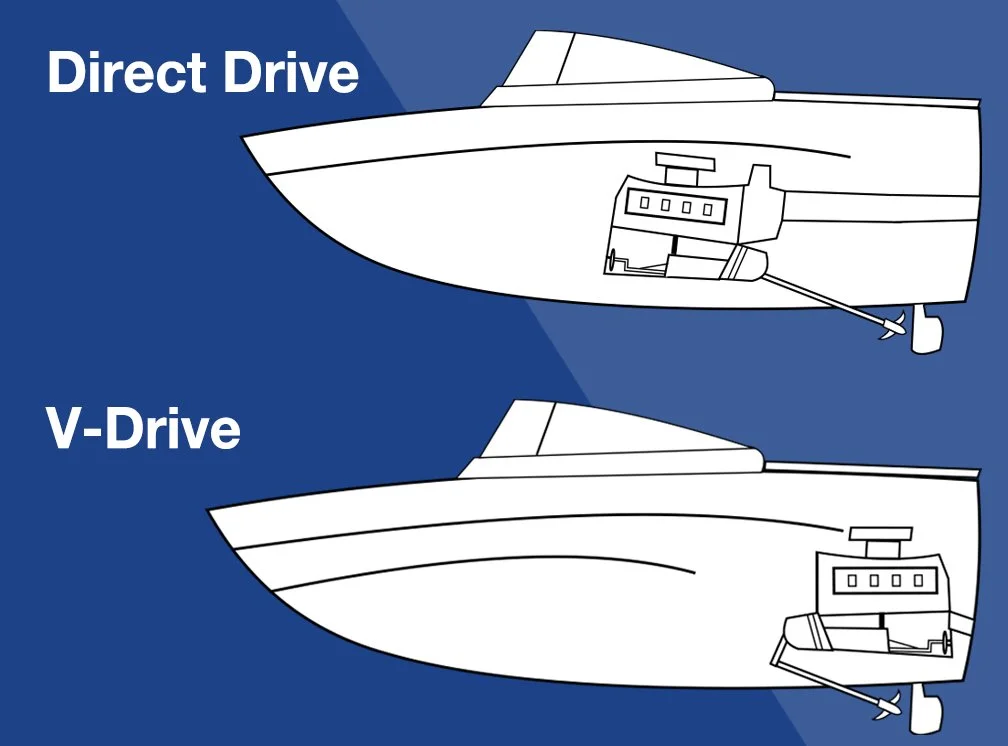
Straight shaft propulsion is a traditional and highly durable inboard marine system in which the engine connects to a straight, rigid shaft that passes through the hull to drive an external propeller. Its advantages include mechanical simplicity and reliability, relatively low maintenance requirements, and smooth cruising characteristics due to the engine’s central placement within the hull. The primary drawback is that this central engine location can reduce available cabin space and may require additional sound insulation to minimize onboard noise.
A V-drive propulsion system, by contrast, features a rear-mounted engine oriented forward, coupled with a transmission that redirects power back toward the propeller shaft beneath the engine. This configuration maximizes cockpit and interior space while shifting weight aft, which enhances wake formation—making it the preferred setup for modern wakeboarding and wakesurfing boats, as well as certain cruising motoryachts designed to prioritize living space. Its main advantage is improved spatial efficiency, while its primary disadvantage is a modest loss of mechanical efficiency due to the redirection of power through the drivetrain.
Jet Drive Propulsion
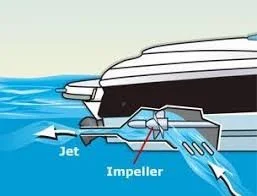
Jet drive propulsion systems use an inboard engine to power a pump that draws water through a hull intake and expels it at high velocity through a nozzle, generating thrust. Because there is no exposed propeller or lower unit, jet-driven boats offer a shallow draft, excellent maneuverability, rapid acceleration, and enhanced safety for swimmers, making them well suited for runabouts and tenders.
However, the intake system can be susceptible to clogging from debris or weeds, which may reduce performance and, in some cases, lead to overheating if not promptly cleared.
In addition, jet drives are generally less fuel-efficient than propeller-driven systems and can involve higher maintenance costs due to the complexity and wear characteristics of the pump components.
Surface Drive Propulsion
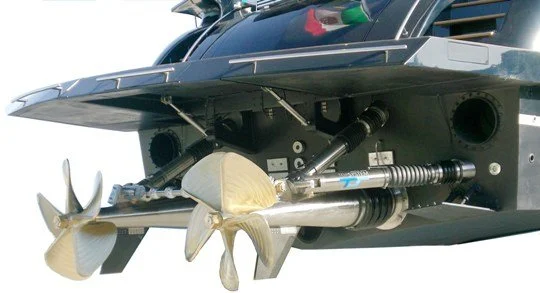
Surface drive propulsion systems, also known as surface-piercing drives, use propellers that operate partially submerged at the waterline, significantly reducing underwater drag compared to fully submerged systems. In this configuration, the shaft and propeller assembly exit through the transom rather than the bottom of the hull. This setup is well suited for high-speed yachts and certain commercial vessels, offering notable gains in efficiency and top-end performance, along with improved shallow-water capability and typically lower running-gear maintenance.
Surface drives also produce the distinctive “rooster tail” spray often associated with high-performance craft. However, these systems can be more difficult to control at low speeds—particularly during docking—due to reduced propeller bite in the water. Some designs incorporate trim or articulation features to improve low-speed handling. Surface drives are commonly found on high-performance vessels, including luxury yachts produced by builders such as Pershing.
Pod Drive Propulsion
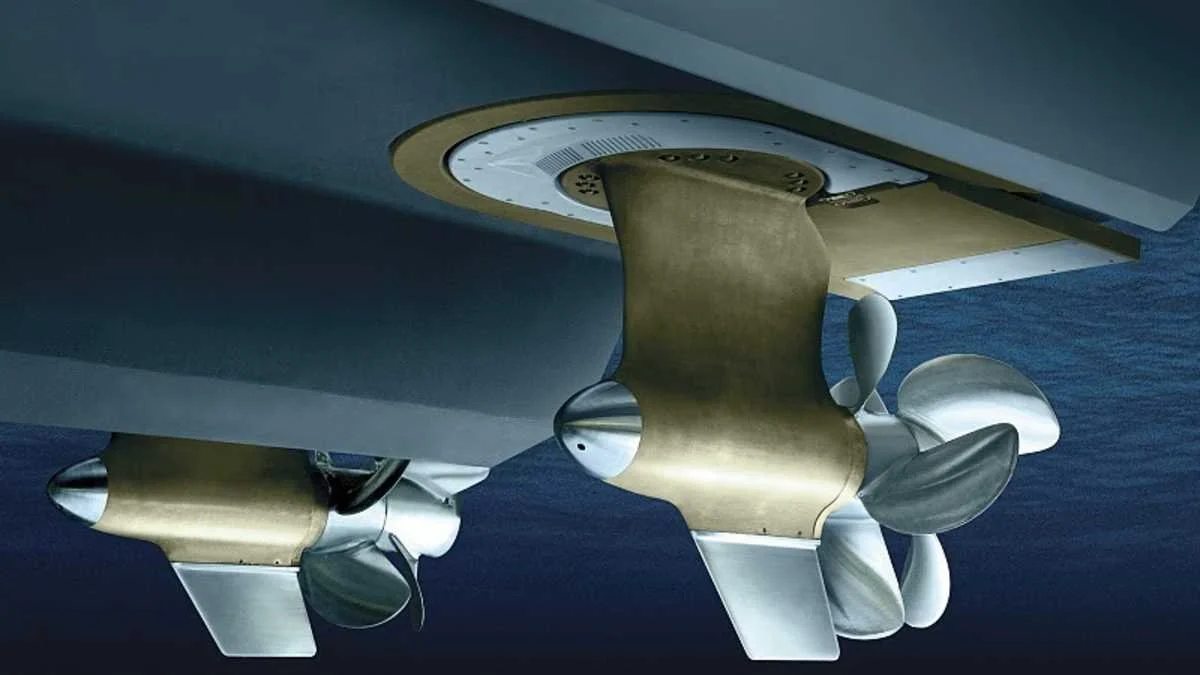
Pod drive boat propulsion systems are modern, under-hull mounted units with forward-facing, steerable propellers. Pod drives first hit the scene in 2006 and have gained a very prominent place in the yachting industry.
There are 3 manufacturers that are making pod drives: Volvo Penta (IPS Pods), Mercruiser (Zeus Pods) and ZF Marine (ZF Pods). Two pods are needed for the system to work as intended, though some yachts utilize 4 Volvo IPS pods.
Pod drives offer 10–30% higher fuel efficiency, 15–20% faster top speeds, superior maneuverability with joystick docking, and a 50% lower noise level compared to traditional shaft drives, though they often cost more and are more vulnerable to underwater damage. Prevalent on yachts over 40 ft, they usually have a higher initial purchase price and more complex maintenance compared to straight-shaft systems.
In conclusion, each one of the propulsion types above have their place in yacht propulsion depending on requirements. Don’t hesitate to email me at uapaydin@owyg.com or WhatsApp me with any questions.
Smooth sailing everyone,
Umut